
This film forced me to dig into historical archives, learn more about the history of Africa, in particular Libya in the 20th century, get to know the events on the territory of this continent during the Second World War. I also watched this tape twice. The first time I took notes for this movie review, the second time I already tried to feel the integrity, its fundamentality and power, without pauses and distractions for writing.
History
A small but necessary excursion into the history of those times. After all, film The English Patient (1996) is a military, and without an idea of the events taking place then, the picture will be less impressive. Despite the skill of the director and his team, it is very difficult to make a complete description of the situation to complement the main plot of the feature film.
The first mention of time period of the film dates back to October 14, 1944, when the main character (Almásy) is asked a question on the territory of one of the rehabilitation camps in Italy. Active hostilities in this area have ended.
However, the so-called memories belong to the period from 1938 to 1944, which makes one somehow interested in what is happening on the territory of African countries, where one of the storylines unfolds.
Libya
Colonized for a long time, Libya suffers from the invasion of one or other nations. England, Italy, the USA – whoever did not come to this region to establish their rules, in an attempt to seize power and control this territory.
There was a fierce struggle for African lands starting from the 14th century. But let’s not go that far, let’s go back to the Second World War or maybe a little earlier, because the events of the alternative line begin in 1938.
The territory of Libya was occupied by the Italian diaspora until November 1942, when Allied forces (USA and England) landed on the continent and went on the active offensive.
In May 1943, Africa was completely cleared of fascist troops. England and the USA jointly began planning to advance through the territory of Italy, forcing the Führer to be distracted by the second front and already thinking about the lost war.
In July of the same 43rd, allied units were already in Sicily, and from September to May 1945, the clearing of the territory of Italy continued, most of which was occupied by the forces of the alliance already in October 1944.
What does all this give us?
The film is set in Africa, specifically in the Italian colony, during the year 1938. As the story unfolds, we witness a shift in military power within the country, ultimately leading to a tragic event that serves as the central focus of the film. This event is depicted both at the beginning and the end of the movie.
Considering these dates, it is interesting to observe different periods throughout the film and compare them to gain a more comprehensive understanding of the atmosphere surrounding the events portrayed.
This contextual information is valuable as the movie is based on real historical events, and incorporating factual knowledge can enhance the viewing experience.
Random Tape and Movie Review
The film had eluded my attention for 38 years of my life, despite being a discerning and selective viewer. It was recommended to me by an old friend. Prior to watching it, I made the mistake of checking the trailer, which, in retrospect, I wish I hadn’t. Trailers tend to be mercilessly geared towards marketing, and in this case, it diminished some of the intrigue for me.
Can a movie be considered bad when, within the first three minutes, you find yourself utterly captivated by the screen, engaging in a guessing game and unsuccessfully attempting to decipher not only what is depicted visually but also the gender of the object in relation to the overall picture?
The meditative introduction lulls you into a specific mood, setting the stage for the remaining two and a half hours of constant tension and contemplation, without a moment of respite. Those few minutes feel like an oasis in the desert—mysterious, pleasant, and exhilarating.
Realism
It comes as no surprise, film “The English Patient” (1996) received numerous accolades for the exceptional work of its cinematographer and production designer. Every second of the film immerses you in an intense realism that evokes scorching heat, horrors of war, smoke lingering after explosions, and even scent of blood on a burnt face. The level of authenticity and its portrayal on the screen is truly astonishing.
Conciseness
The storytelling is executed with meticulous elegance, leaving no room for unnecessary moments, movements, or words. Despite its nearly three-hour runtime, it never feels cumbersome; quite the contrary.
Main characters and plot
From the very beginning, without any preamble, the viewer is thrust into a cruel and unforgiving world of war, suffering, pain, and death. Within the first 10 minutes, we bear witness to several tragic events. A sense of hopelessness and anxiety pervades, and an insatiable curiosity arises regarding how the main characters will navigate these challenges and what fate awaits them.
Right from the outset, you can sense the assured and skillful hand of the director, firmly grasping your attention.
The decision to stay in the dilapidated estate may seem nonsensical, but against the backdrop of the stark realism of the narrative, it doesn’t come across as madness; quite the opposite – it infuses the story with a touch of fairy tale, occasionally sparing the viewer unnecessary peripheral characters in the frame.
Our attention becomes fully absorbed by the contemplation of the ruined surroundings, the beauty of the female lead, the natural elements, and the interaction between the two main characters, both weathered and despondent.
While we have come to know the main character, Hana (Juliette Binoche), intimately, observing her behavior, decisions, and life experiences, the male lead, Almásy (Ralph Fiennes), remains an enigma, requiring a measured and careful unveiling. It is through the fragments of his past that this task is masterfully accomplished.
Though the film is described as a collection of memories, that is not entirely accurate, as Almásy initially confesses to having forgotten almost everything. Hence, these glimpses into his former life are a brilliant directorial and script maneuver, meticulously conceived and flawlessly executed. Throughout the film, the question lingers: were these genuine recollections, or did Count Almásy feign memory issues, leaving us uncertain about the true nature of these flashbacks?
“A surveyor-cartographer…” is everything that comes out of his mouth; that’s all he remembers in early days. These journeys into the past are not as coherent as memories typically are. Our survivor is still piecing together his shattered life, and we are granted access to these temporal excursions because we can afford them.
Script in The English Patient (1996)
The plot remains consistently engaging, leaving no room for boredom. Each shot is meticulously crafted and purposeful, with nothing extraneous. Every second of the film carries its own significance and is brimming with substance.
The multi-layered narrative style keeps you engrossed, prompting you to delve into each character individually and within the broader context of the story.
Love stories
Are interwoven throughout the film, but the primary one between Count Almasy and Katharine Clifton takes center stage and gradually takes shape.
The metaphorical quest for a mysterious cave in the African desert serves as a symbolic representation of the protagonist’s journey in search of both the meaning of life and the elusive wonder called “love.”
A weariness lingers in Almasy’s eyes, transitioning into sadness, loneliness, and disillusionment. These emotions are momentarily replaced by passion during their moments of intense connection and carefree intimacy. The main character carries these sentiments and a pervasive sense of melancholy throughout the entire film, presenting them to the viewer and his sole confidant as a precious gift.
In my interpretation, the cave they discover becomes the sanctuary where his happiness resides—an ephemeral moment of pure joy captured in the rare instances when Almasy smiles. It is here that he bids farewell to his love after a tragic accident, and their attempt to forge a life together beyond the confines of the cave, symbolizing their future, proves fatal.
The shift from an indifferent and callous cartographer to a romantic storyteller may seem abrupt and unexpected, especially during their encounter in the midst of a sandstorm within the cramped space. Here, his sharp and curt responses, coolness, and aloofness could have continued, but something changed within him—an alteration unfortunately left unseen.
While there are diary entries and a book marked “K,” they fall short in providing a complete understanding. Nevertheless, if one examines their romance without scrutinizing every minute detail, its further development appears logical and meaningful. They had ample time, with the husband’s absence, to dispel each other’s doubts and ignite their passion.
Both Almasy and Katharine do not hide their feelings, which oscillate between affection and disgust.
He finds happiness in her voluntary presence, only to be immediately disheartened by the fact that he must share her with her lawful husband. This doomed affair was destined for failure from the very beginning, and its seamless progression from scene to scene, year after year, culminates in tragic events—a poignant symbol of the inevitable collapse of such relationships.
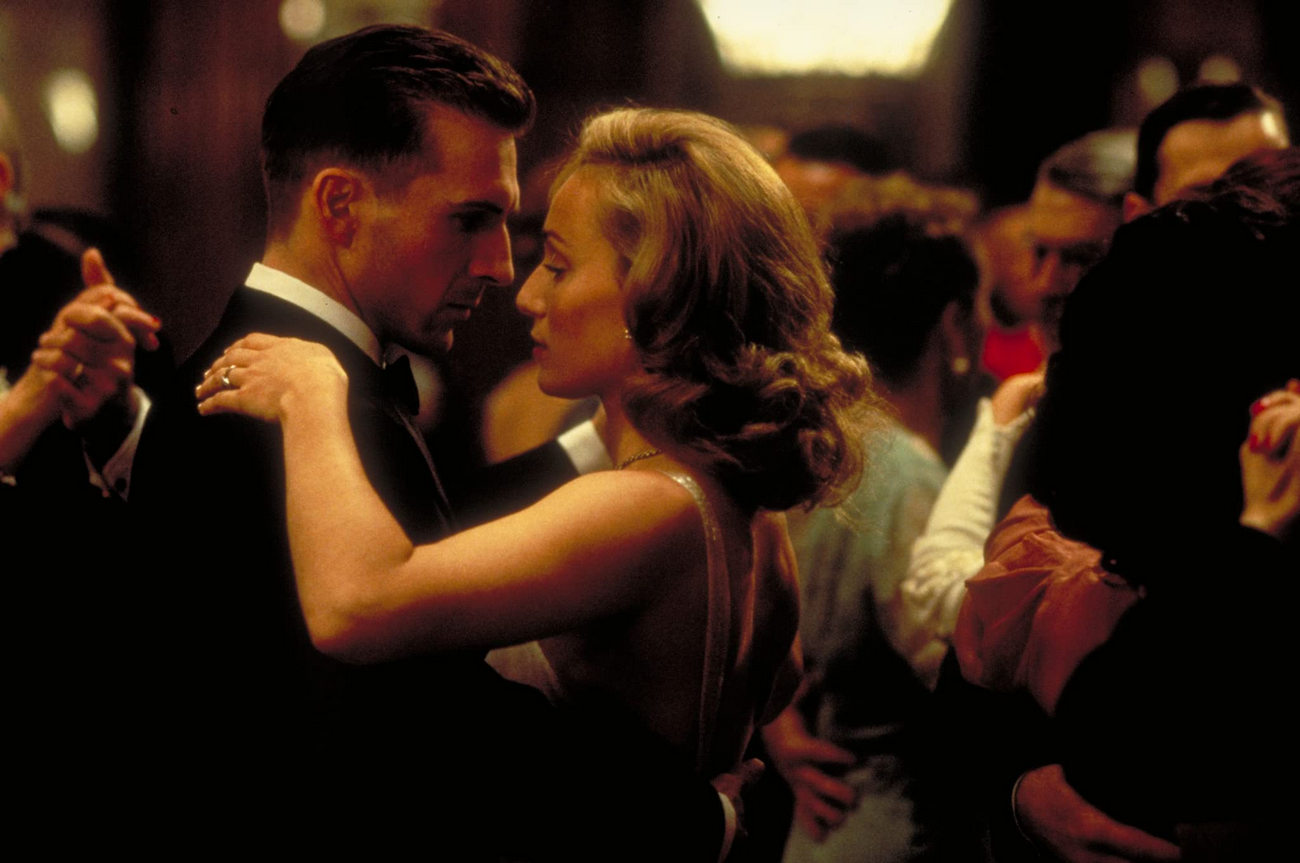
December 22, 1938, showcases one of the finest love scenes in cinema, characterized by impeccable staging, cinematography, acting, and an awe-inspiring spectacle.
What is love?
The film provides an opportunity to explore the concept of love through the characters of Kath and Almasy. However, to me, this entire passionate affair appears more like theatrics than genuine love.
If she truly “loved him,” what stopped her from leaving her husband and starting a life with him?
She herself wouldn’t be able to answer this question because her behavior throughout the film was formless and superficial. It lacked specificity and genuine love. What she associates with love are merely empty sounds, recorded passion, admiration, and infatuation.
All of this adds to dramatic tension of the film. Almasy sacrifices the lives of potentially hundreds, if not thousands, of people in an attempt to save only one person who is undoubtedly important to him. It is a sacrifice made on the altar of love, but in the end, all that remains are mere words and memories.
Almasy wasn’t saving her, love, or his own future. Instead, he was grasping at dust, a ghost, nothing but a mirage.
Almasy in The English Patient (1996)
To me, the count’s ugliness is a portrait of a man worn out by life, disfigured by a love affair. Instead of taking rational actions to establish strong relationships, we witness bursts of jealousy, possessiveness, envy, deception, and hypocrisy.
Both he and she are worthless individuals in my eyes. He rightfully receives the consequences of his tormented impulses, while she fades away in the desert, as empty and arid as she is.
The climax of this overblown and unsupported “love union” is the drama with which Almasy recounts what happened. He wants his actions to fit into the romantic image of a sufferer, but it is too late. He himself understands, becoming even more aware of his own soullessness and emptiness, which have tormented him for more than a year. In light of recent events, he utters the words, “I can’t be killed. I’ve been dead for a long time.”
Katharine Clifton (Kristin Scott Thomas) could have saved him and rekindled the light in his heart if she weren’t equally exhausted, indifferent, absurd, and empty.
Of course, my perception may be categorical and aggressive. For many, this film will evoke tears and sympathy, and despite all his sins and scars, the count may appear attractive rather than a bastard.
Additional Characters in The English Patient (1996)
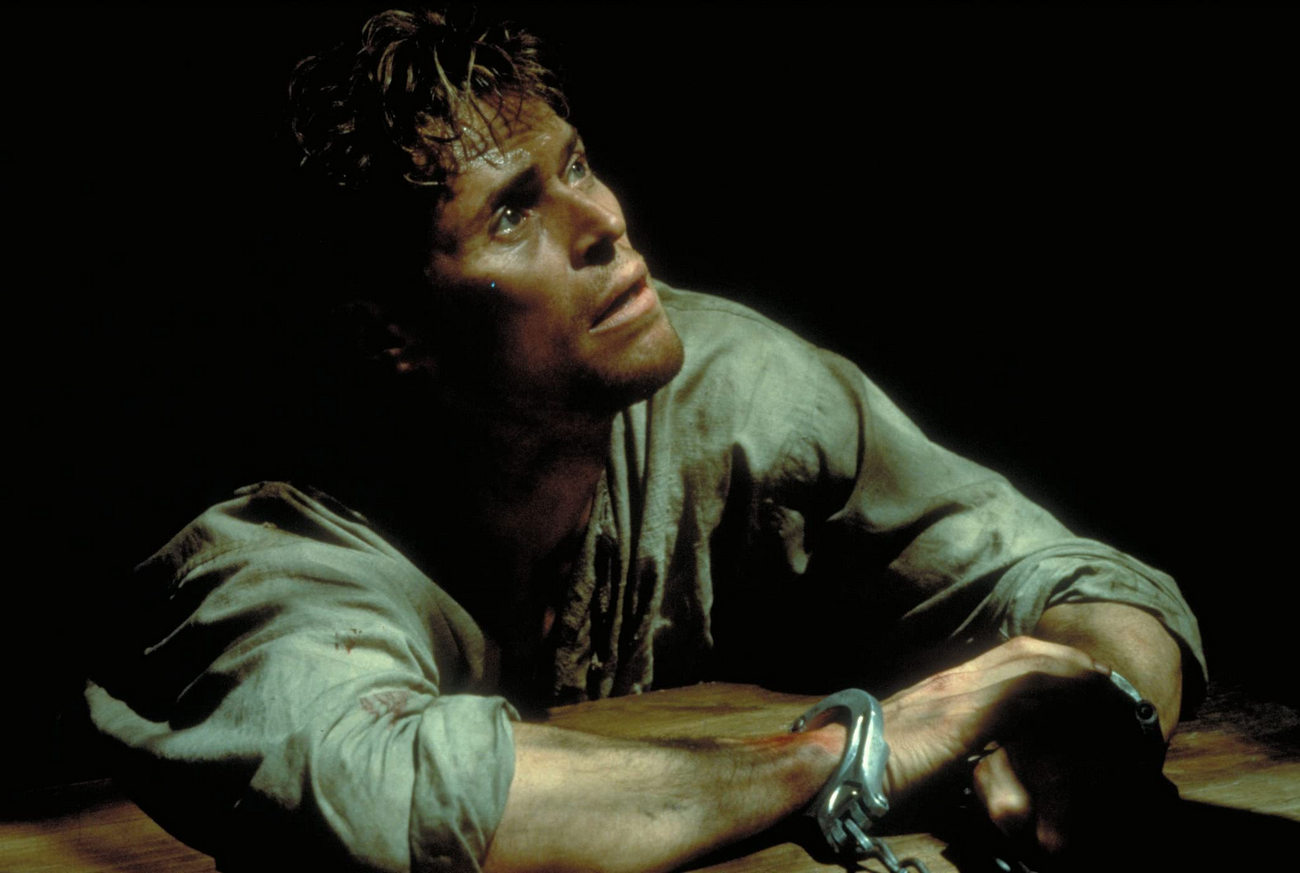
Willem Dafoe’s as Caravaggio adds intrigue to the narrative, although there was already enough of it. Now, I am curious to uncover all the details of the events that transpired before. However, Caravaggio, apart from contributing to the intrigue, doesn’t bring much substance. He remains empty, much like the scene with him directed by the filmmaker. He is merely a seasoning in this dish, nothing more.
Naveen Andrews as Kip embodies the essence of a true man. People get married to and fall in love with individuals like him. He is wonderful in every aspect, neither needing any additions nor subtractions. His acting may be average because he wasn’t required to do much other than a few shots with a stone face. His beauty lies in his charisma, hair, costume, and the well-chosen role of an endearing sapper.
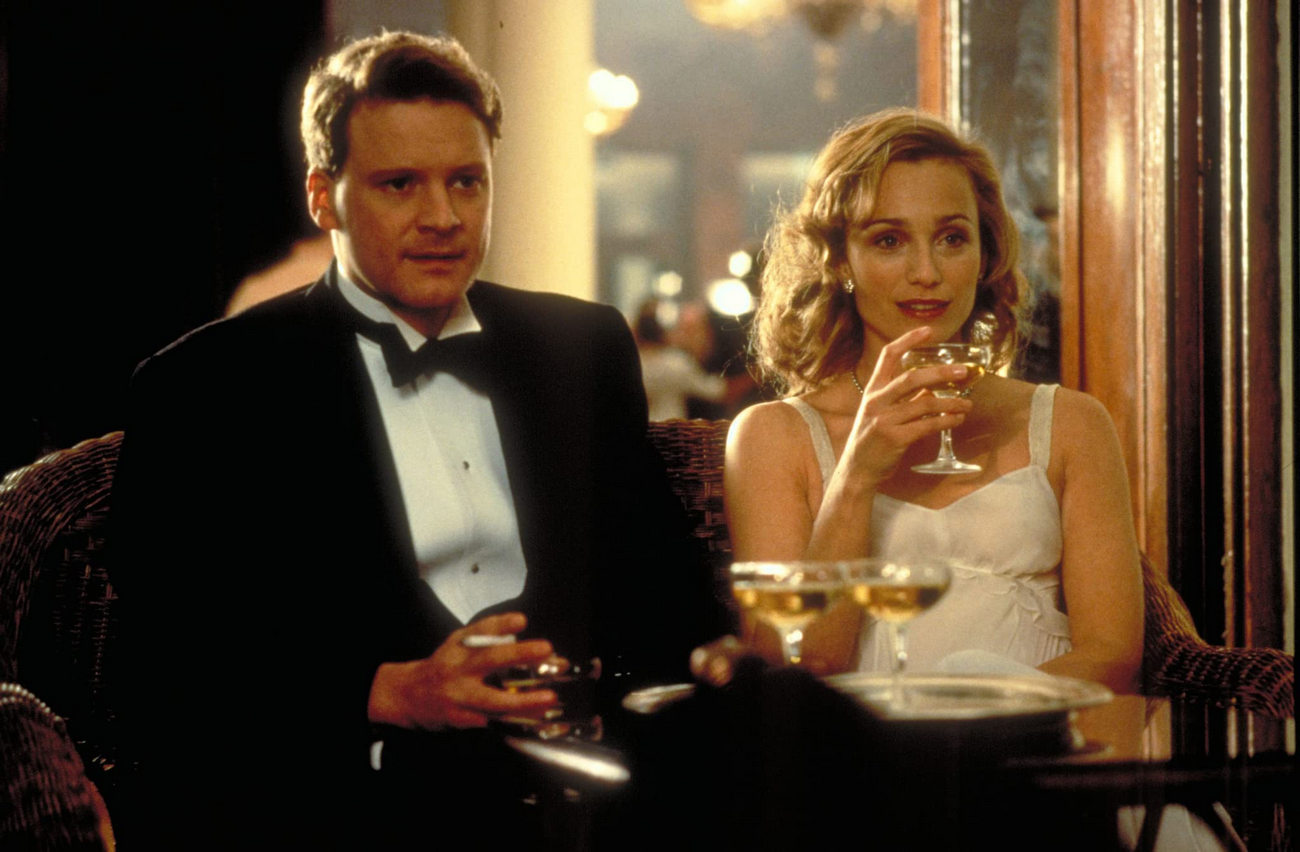
Colin Firth as Geoffrey Clifton portrays a refined aristocrat, a man passionate about his work. Whether he worked for the civil service or engaged in tourism and cartography, it doesn’t matter. His role is simple and unpretentious: to depict a wealthy, self-assured, legitimate, and lustful man. He executes it well. Although his role is episodic, Colin Firth, as always, is unsurpassed.
Juliette Binoche as Hana, I saved her for last. She is undeniably wonderful, and it’s no wonder this film won nine Oscars. Without Juliette Binoche, it wouldn’t have been possible.
Like her “English patient,” Hana suffers from the loss of loved ones, and the next “patient” on her list becomes a symbol of her suffering—a concentrated embodiment of pain and despair. She is in agony, yet she continues to embrace life, opening herself up to new emotions and relationships. In the end, she manages to conquer her curse within the patient—the fear, regrets, and her past—that burdened her during the war years.
Hana symbolizes hope. It is what remains in each person when they are on the brink of surrendering to their fate, lying at the bottom of the deep pit of depression.
Hope is the last spark that can reignite the fire of life in any living being. Juliette Binoche portrays her role brilliantly.
Her character feels alive and real. People like her are what we wish to encounter more often in life—individuals we can admire for their simplicity, inner strength, and humanity.
Music
It takes a backseat as the events unfolding capture all the attention. However, personally, I wasn’t particularly excited about any unnecessary interruptions or the strong musical choices. Yes, there is music playing in the background, and it fits well, but that’s about it. Although it did win an Oscar for its music. Well, so be it 🙂
Mistakes in movie The English Patient (beware, spoilers)
I’ve already shared quite a few spoilers above, so I won’t hold back in the following text. While the film is powerful, it does have some errors:
- The car accident in the desert. After the sandstorm, they unearth one of the cars, but the wet sand covering the car doesn’t make sense; it should be extremely dry.
- The same episode (from #1). If the people inside the cabin were buried in the sand as depicted in the movie, they wouldn’t have lasted very long. The oxygen inside the car would only be enough for a few minutes. However, they seem fine, and there’s no indication of a lack of oxygen.
- The episode with the mined estate. One of the sappers mentioned that there were at least 50 mines in the house, yet none of them exploded during Hana’s stay or while arranging the area.
- The flash of the explosion during the victory celebration and the sound from the explosion occur simultaneously. However, the speed of sound is much slower than the speed of light. In reality, the sound in that scene should have reached the estate approximately 4-5 seconds after the flash.
- The plane crash caused by Kath’s husband. The damage and impact of the fall depicted on screen are not survivable, especially for the seat in the front where Geoffrey Clifton’s wife was seated. It’s unlikely she would have only sustained a few broken ribs.
- The situation Almasy finds himself in at the end of the film feels contrived. He is left alone in the desert after the accident, without anyone to help him. This seems to be for the sake of increasing the drama and creating a “powerful” ending. Additionally, the reason he remains alone is that Geoffrey Clifton promised to take him with him. But how exactly, if there are only two seats in the plane and three passengers were supposed to be accommodated?
Conclusions
“The English Patient” garnered numerous awards and is undeniably good, despite my reservations and disappointments with the main characters. Perhaps, if I were in a more romantic mood, I might have shed a few tears, especially if I had watched it 20 years ago.
Back then, I loved such stories and didn’t delve too deeply into them. It wasn’t necessary at all.
Do the 9 Oscars it won deserve merit? I can’t say for certain, as I didn’t watch all the contenders that year. However, these awards don’t seem unwarranted. There’s plenty to appreciate and hold onto. The director, cinematographer, casting, and performances are all top-notch. It’s truly a masterclass.
Will this film find its place on my list of masterpieces? Most likely not, as it feels a bit pretentious and one-sided. Nevertheless, I did enjoy it. In fact, I watched it twice with pleasure while writing this movie review.
I recommend it for viewing.
My rating for The English Patient is 8 out of 10
 P.S. One of my first full-fledged movie reviews. Written at the beginning of 2022. Translating it from russian to Ukrainian and English, I see flaws, and now I would write a little differently, but let it be as it is.


